

Architecture
A model on its own is inert - it reads tokens and predicts the next ones. The harness is everything wrapped around it: the environment prompts and tools flow into, and useful behavior flows back out of. It’s the part your users actually touch; the model never does directly.
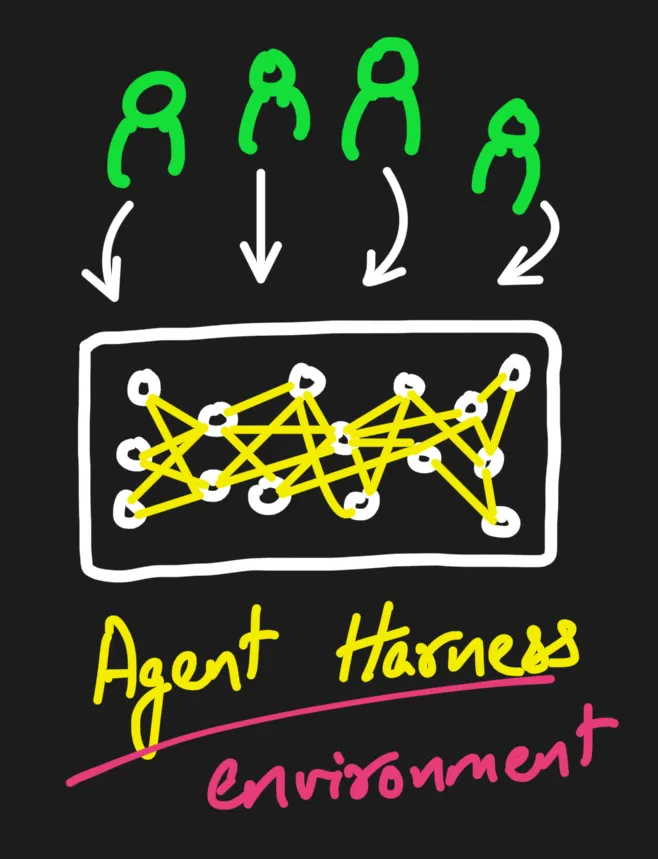
Orion sits between your application and your inference engine. You own the top (UI/app) and the bottom (the model runtime); Orion owns the middle - the orchestration that turns a prompt into a streamed, tool-augmented answer.
┌──────────────────────────────────────────────────┐│ Your application (CLI, server, desktop app, …) │├──────────────────────────────────────────────────┤│ Agent ││ ├── prompt("Hello") ││ ├── Conversation state (Vec<Message>) ││ ├── System prompt ││ ├── Registered tools ││ └── AgentConfig (inference params, context cfg) │├──────────────────────────────────────────────────┤│ Context pipeline ││ └── prepare_context() - prune + template format │├──────────────────────────────────────────────────┤│ LlmBackend (trait) ← you implement this ││ ├── generate() - run inference, stream tokens ││ ├── tokenize_count() - count tokens ││ └── is_ready() - check model status │├──────────────────────────────────────────────────┤│ Your inference engine ││ (llama.cpp, MLX, ONNX, cloud API, etc.) │└──────────────────────────────────────────────────┘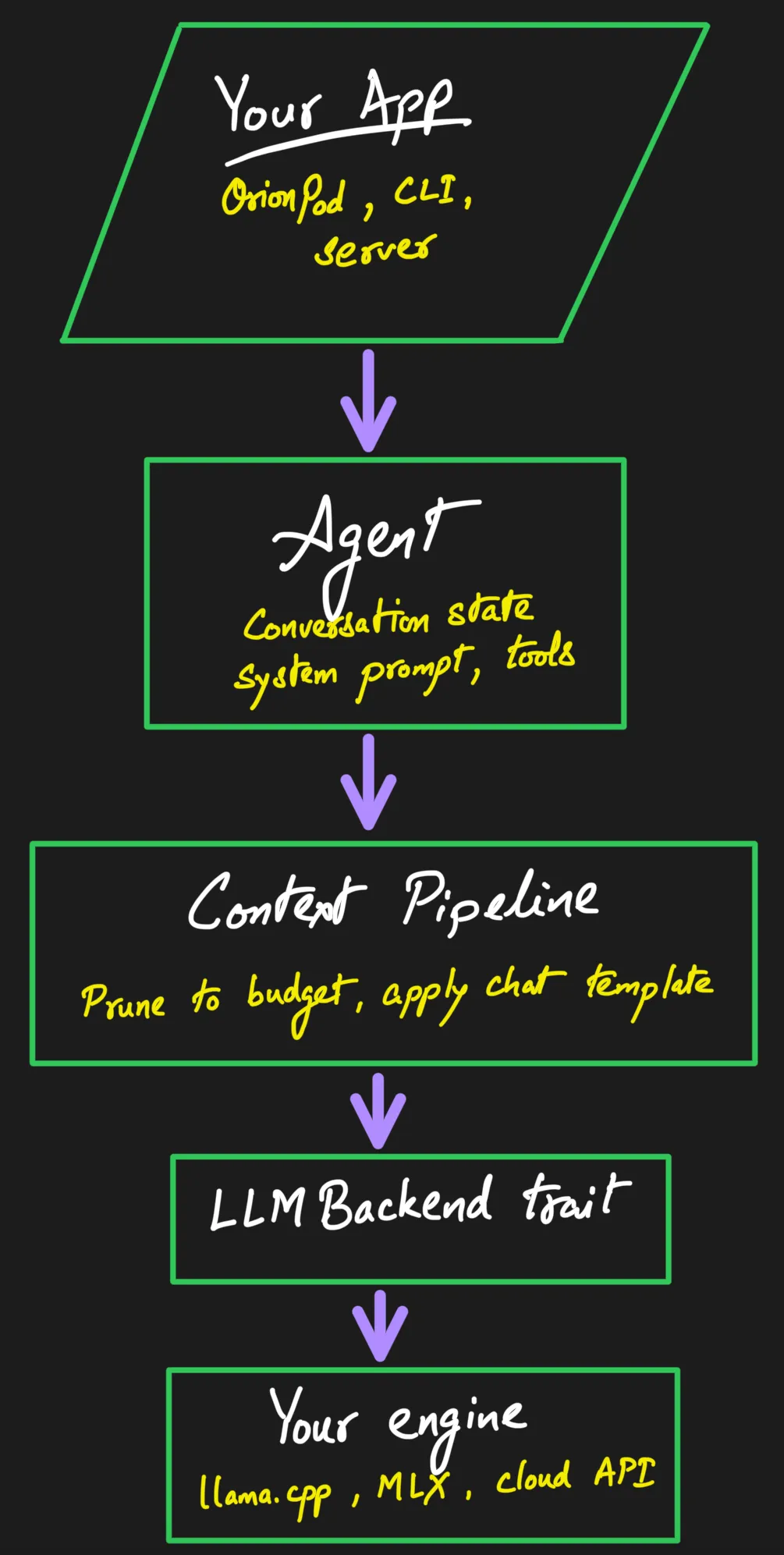
You write the top (your app) and the bottom (your engine). Orion is everything
in between - and the only seam that matters is the LlmBackend trait.
The loop
Section titled “The loop”A single call to Agent::prompt drives the whole cycle:
- Append the user message to the conversation.
- Prepare context - the pipeline prunes old messages to fit the token budget and formats the survivors into a prompt string using the active chat template (injecting tool schemas if any tools are registered).
- Generate - the backend streams tokens, which surface as
MessageDeltaevents in real time. - Tool loop - if the model emitted tool calls, the agent runs the matching
tools, appends their results, and loops back to step 2. This repeats until
the model returns a tool-free answer (bounded by
AgentConfig::max_tool_iterations, default 8). - Finish - the final assistant message lands and the call returns.
Events flow upward
Section titled “Events flow upward”Every meaningful step emits an AgentEvent through an unbounded
channel (tokio::sync::mpsc). Your UI or application layer subscribes and
reacts in real time - streaming tokens to the screen, showing tool progress, or
rendering the live context-budget gauge. The agent never touches your UI
directly; it only emits events.
Backend-agnostic by design
Section titled “Backend-agnostic by design”Orion knows nothing about your model runtime. It calls three methods on
the LlmBackend trait and orchestrates everything else. That
keeps the harness identical whether you run a local GGUF model through
llama.cpp, an MLX model on Apple silicon, or a remote OpenAI-compatible
endpoint.